Romania Retezat Park Permit Caps Strand Hikers at Peak Season Gate
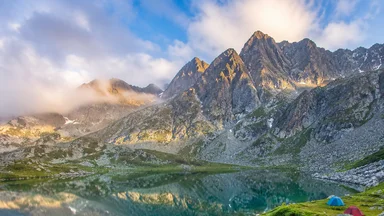
Retezat National Park, in the Southern Carpathians of Romania, is a landscape of glacial lakes, jagged peaks, and alpine meadows that has drawn hikers for decades. But in recent years, the park has become a case study in the tension between conservation and access. Since 2022, Retezat has capped daily entries at 200 hikers during peak season. On many July and August days, demand exceeds that number threefold. Hikers without a pre-booked permit are turned away at the gate. The result: a trail system that feels empty, but a parking lot that tells a different story.
The 200-Hiker Ceiling That Turns Away Dozens Daily
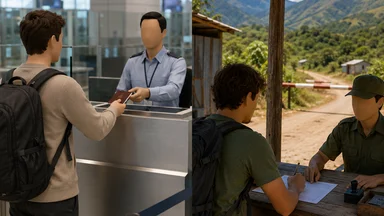
The cap is not a suggestion. Park rangers stationed at the main entry point, Cabana Carolina, check each hiker's permit QR code before allowing access. According to the Retezat National Park administration, the refusal rate during July and August hovers around 40 percent. On peak weekends, that figure can climb higher. The online booking system, which opens exactly 30 days ahead, is the only way to secure a spot. There is no same-day walk-in option except in rare cases when cancellations occur.
Romanian media have reported instances of hikers driving four or five hours from Bucharest or Cluj-Napoca, only to be turned back. The park's Facebook page posts daily remaining slots, but by mid-morning the count is usually zero. For a traveler who has planned a trip around a specific date, this can be a hard stop.
The cap applies to all visitors entering the park beyond the buffer zone. Day hikers, overnight trekkers, and those staying at Cabana Bucura all need a permit. The only exception is for visitors who stay within 500 meters of the park's edge, which essentially means the road leading to Cabana Carolina. That road is scenic but does not reach the glacial lakes.
Some hikers have criticized the system as too restrictive, arguing that it prioritizes foreign tourists who book early over locals who decide on a whim. Others point out that the cap is the same for everyone, regardless of nationality. The system, they say, simply requires planning. A further criticism is that the online system can be glitchy; some users report that the website crashes when permits go live, or that the payment gateway fails. The park administration has acknowledged these issues but has not yet upgraded the platform. For the 2024 season, they added a queue system that shows your position, which has reduced some frustration.
Why the Cap Exists: Fragile Alpine Ecosystem
Retezat holds one of the last pristine networks of glacial lakes in Europe. More than 80 lakes dot the park, including Bucura Lake, the largest glacial lake in Romania, at 2,040 meters elevation. The surrounding terrain is delicate: alpine turf that takes decades to recover from a single boot print, rare flora such as the edelweiss and the Retezat gentian, and a population of chamois and marmots that are sensitive to human disturbance.
A carrying-capacity study commissioned by the park in 2019 recommended the 200-person limit based on trail erosion, campsite degradation, and wildlife disturbance data. Park rangers have documented visible trail widening around Bucura Lake — from a narrow path to a swath roughly 3–5 meters wide in some sections — and trampled vegetation near popular camping spots. Since 2022, the park has been a candidate for UNESCO World Heritage status, which adds pressure to maintain ecological integrity.
Not everyone agrees with the cap. Some local guides argue that the park could accommodate more hikers with better trail hardening and designated campsites. They point to parks in the Alps that host thousands daily without visible damage. But Retezat's budget is smaller, and its ranger staff is limited. In September, the cap drops to 150 because fewer rangers are on duty to monitor the backcountry. The park also faces challenges with illegal camping and off-trail hiking, which the permit system helps curb. A 2023 report by the park's scientific council noted that since the cap was introduced, incidents of vegetation damage decreased by roughly 30 percent, though the data is preliminary.
The debate is ongoing. What is clear is that the cap is not arbitrary. It reflects a real concern that Retezat's fragile ecosystem cannot sustain unrestricted foot traffic. For hikers who do secure a permit, the reward is a wilderness experience that feels genuinely remote. The trade-off is that some people are excluded, but the alternative — a degraded landscape — would exclude everyone in the long run.
A 3-Day Window: Realistic Entry in Late June
If you can time your trip for late June, your chances of securing a permit improve significantly. Between June 15 and June 30, roughly 60 percent of the daily cap remains available on weekdays. Weekends still fill quickly, but a Tuesday or Wednesday entry is often open even a week ahead. The weather is unpredictable — expect a 35 percent chance of rain — but the trails are less crowded, and the alpine flowers are in full bloom. The edelweiss and gentian are particularly striking in late June, and the marmots are active after their hibernation.
A solid three-day itinerary starts at the Poiana Pelegii trailhead, about 18 kilometers from the town of Lupeni. The first day involves a steady climb through beech and spruce forest to the Bucura Lake basin, roughly 6 hours with a moderate pack. Cabana Bucura, the mountain hut at the lake, offers basic dormitory beds and hot meals. It must be booked separately from the park permit, and it fills up weeks in advance. The hut has about 60 beds, and in peak season they are often booked solid. If you cannot get a bed, camping is an option at designated sites near the lake, but you must bring your own tent.
Day two is a loop around the lake and an ascent to the Vf. Peleaga (2,509 m), the park's highest peak. The trail is rocky and exposed in sections, but the view over the lake and surrounding cirques is the payoff. The ascent takes about 3–4 hours from the hut, and the descent another 2–3. Day three descends via the same route, with time for a swim in the lake if the weather cooperates — the water temperature in June is around 10–12 degrees Celsius, so a quick dip is refreshing but not for the faint-hearted.
This pace is humane. You are not rushing between peaks. You have time to sit by the lake, watch marmots, and adjust to the altitude. The permit cap means you will not be sharing the trail with a hundred other people. However, be prepared for the possibility of afternoon thunderstorms, which are common in the mountains. Start early each day to be off exposed ridges by early afternoon.
7-Day Deep Dive: Off-Peak Strategy in September
September is the sweet spot for Retezat. The daily cap drops to 150, but demand falls by about 50 percent after August 31. Permits are often available a day or two ahead, even on weekends. The weather is cooler, with daytime temperatures between 10 and 18 degrees Celsius, and snow is possible above 2,400 meters. The crowds are gone, and the autumn colors begin to show — the dwarf pine turns golden, and the blueberry bushes are a deep red.
A seven-day loop can cover the park's western and central zones. Start at Cheile Râului Mare, a limestone gorge that marks the park's western boundary. From there, ascend to the Lolaia saddle, then traverse east toward Lake Gugu, a less-visited lake at 2,000 meters. The trail is marked but can be faint in places; a GPS track is recommended. The section between Lolaia and Gugu is particularly remote, with no huts and few water sources. Plan to carry at least 3 liters of water and filter from streams when possible.
Wild berry season peaks in September, and bears are active. Carry bear spray and know how to use it. The park advises making noise on the trail and storing food in bear-proof containers. Camping is only allowed at designated sites, which are marked on the park map. There are roughly 15 designated campsites in the park, each with a simple wooden sign. They are basic — a flat spot and sometimes a fire ring — but they help concentrate impact.
The loop takes about five days of hiking, leaving two rest days. Cabana Bucura is still open until late September, but it is wise to carry a tent as backup. The solitude is remarkable. You may go an entire day without seeing another person. The trade-off is that you need to be self-sufficient: there are no shops or restaurants inside the park, and the nearest town is Lupeni, a 40-minute drive from the trailhead. Plan your food carefully, and bring a stove if you want hot meals on the trail.
14-Day Humane Pace: Combining Retezat with Neighbouring Parks
For a two-week trip, consider splitting your time between Retezat and Domogled-Valea Cernei National Park, a less-visited park to the southwest. Domogled has no permit cap, but its trails are poorly marked and the infrastructure is minimal. The trade-off is genuine wilderness with almost no other hikers. The Cerna Valley, in particular, offers dramatic limestone gorges, waterfalls, and hot springs that are rarely crowded.
Week one in Retezat: three to four days of hiking, with rest days at Cabana Bucura or in the town of Lupeni. Use the rest days to do laundry, resupply, and check the weather. The permit cap means you cannot extend your stay inside the park without a new permit, so plan your entry and exit dates carefully. If you want to spend more than three days inside the park, you need to book consecutive permits, which is possible but requires planning. The system allows you to book up to 14 consecutive days, but each day's permit is separate and must be printed.
Week two: take a bus from Lupeni to Băile Herculane, a spa town at the edge of Domogled. The fare is roughly 8 to 12 euros. From there, day hikes into the Cerna Valley offer waterfalls, limestone formations, and hot springs. The trails are not maintained, so a GPS and offline maps are essential. The most popular route is the Cerna Valley Trail, which follows the river for about 15 kilometers through a narrow gorge. It is relatively flat but requires crossing the river several times, so waterproof footwear is recommended. The hot springs at the northern end of the valley are a highlight — they are free, but the water temperature varies between 30 and 40 degrees Celsius depending on the pool.
Pack food for the entire trip. Villages are sparse, and shops in Lupeni and Băile Herculane have limited selection. Dried goods, nuts, and instant meals are your friends. Water is abundant from streams, but treat it. A water filter or purification tablets are essential, as giardia is present in some areas.
This itinerary is not for the checklist traveler. It is for someone who wants to move slowly, read a book in a meadow, and accept that some days the weather will not cooperate. The reward is a deep immersion in two of Romania's most beautiful and least crowded mountain ranges.
What Gate Refusal Looks Like in Practice
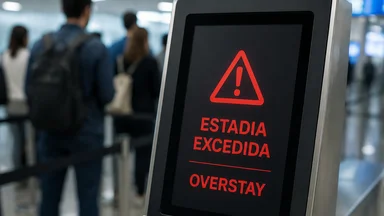
Imagine you arrive at Cabana Carolina after a two-hour drive from Lupeni. The ranger asks to see your permit. You pull out your phone. She explains that only printed permits are accepted — digital copies are not valid. You have no paper. You are turned away.
This scenario happens more often than you might think. The park's website clearly states that permits must be printed, but many travelers miss the fine print. A few kilometers down the road, there is a small kiosk where some hikers have managed to print their permits, but it is not guaranteed. The kiosk is a small convenience store that sometimes offers printing services, but the owner is not always there, and the printer may be out of ink. In 2023, a group of hikers reported driving an extra 20 kilometers to Lupeni to find a print shop, only to return and find that their permit had expired because they missed the entry window.
If you are refused, your options are limited. The park occasionally releases same-day walk-in permits if registered hikers do not show up, but this is rare. In July and August, the ranger may have a list of no-shows, and if someone doesn't arrive by 10 a.m., their slot is released. But this is unpredictable, and you could wait for hours with no guarantee. Most rangers will redirect you to the Cerna Valley, which is outside the permit zone and offers decent hiking. Another option is to try again the next day if a slot opens, but that means an unplanned overnight stay. The nearest accommodation is in Lupeni, where a basic guesthouse costs around 20 to 30 euros per night.
The park's Facebook page posts the number of remaining slots each morning. In practice, the count is often zero by 9 a.m. during peak season. The best strategy is to plan ahead and print your permit before you leave home. Also, double-check that your permit is for the correct date and entry point. A common mistake is booking a permit for the wrong trailhead — there are two main entry points, and they are not interchangeable.
Packing and Permits: The Pre-Trip Checklist
Book your permit at the park's official site (fee roughly 3 to 5 euros). The site opens 30 days in advance. Permits for weekends go first, so set a calendar reminder. Print the permit — do not rely on a phone screen. Bring a backup copy in your pack. Also, save a screenshot of the QR code as a last resort, though the rangers may not accept it.
Packing list essentials: bear spray (available in Lupeni for around 15 to 20 euros), rain gear (the mountains generate their own weather), a GPS device or offline map app (like Maps.me or Gaia GPS), and a first-aid kit. Camping gear is only needed if you plan to stay at designated campsites; otherwise, Cabana Bucura provides beds and meals. A health consultation is advisable before remote hiking, as covered in a related article on travel health.
Water purification tablets or a filter are recommended. Streams are clean-looking but can carry giardia. Carry at least 2 liters of capacity. Food should be calorie-dense and lightweight. The nearest proper supermarket is in Lupeni, which is a 40-minute drive from the trailhead. Stock up on dried fruits, nuts, instant noodles, and energy bars. Fresh produce is available but will not last long on the trail.
Finally, have a backup plan. If you cannot get a Retezat permit, consider the nearby Făgăraș Mountains, which have no cap and offer equally dramatic scenery. The Făgăraș range has the highest peaks in Romania, including Moldoveanu (2,544 m), and a well-marked trail network. The downside is that it is more popular and can be crowded on weekends. Another alternative is the Piatra Craiului National Park, which has a smaller permit system but is easier to access from Brașov. The permit system is a hurdle, but it is not the only door into the Carpathians. With a little flexibility, you can still have a memorable mountain adventure in Romania.