Osaka Guesthouse Trade-Offs Versus Shin-Osaka Hostel for Rail Travelers
For rail travelers arriving in Osaka, the accommodation choice often boils down to two neighborhoods: bustling Osaka Station area or the quieter Shin-Osaka Shinkansen hub. Each offers distinct advantages depending on your itinerary length, budget, and appetite for social interaction. This article compares guesthouses near Osaka Station with hostels around Shin-Osaka, using realistic 3-, 7-, and 14-day windows to highlight the trade-offs. No hype, just the boring details that matter when you're hauling a suitcase between bullet trains.
The Rail Traveler’s Core Dilemma: Osaka vs. Shin-Osaka
Osaka Station sits at the heart of the city, surrounded by shopping, dining, and nightlife. Guesthouses here run roughly ¥3,000–5,000 per night for a dorm bed, with private rooms available for ¥6,000–9,000. The area is dense and lively, but the Shinkansen platforms are a 10–15 minute subway ride away at Shin-Osaka. That adds about 20–30 minutes round-trip each time you board a bullet train.
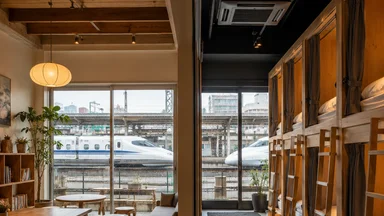
Shin-Osaka, by contrast, is a transit-oriented district. Hostels and capsule hotels cluster within a 5-minute walk of the Shinkansen gates. Rates hover around ¥2,500–4,000 per night for a pod or dorm bed. The trade-off: fewer restaurants and bars open late, and the atmosphere leans transactional rather than social. For travelers catching early-morning trains or arriving after 10 p.m., the proximity is a clear win.
The core dilemma: do you prioritize neighborhood energy and cultural immersion, or do you optimize for the 5–10 minute train ride that saves you 20–30 minutes of walking each day? For a short stay with multiple day trips, the math tilts toward Shin-Osaka. For a longer stay where you explore Osaka itself, the guesthouse area offers more depth.
Consider a concrete example: a traveler staying three nights, planning day trips to Kyoto (30 minutes by Shinkansen), Nara (45 minutes), and Himeji (30 minutes). If staying at Osaka Station, each day trip requires an extra 20-minute round-trip subway ride to Shin-Osaka, totaling an hour over three days. That's an hour that could be spent at a temple or grabbing an extra bowl of ramen. The subway cost adds roughly ¥180–240 per trip, or about ¥540–720 total—enough for a convenience-store breakfast.
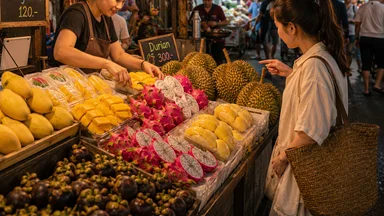
On the other hand, a traveler who spends all three days exploring Osaka—visiting Osaka Castle, Dotonbori, and Kuromon Market—might never set foot on a Shinkansen. For them, the guesthouse location saves subway time to these attractions. The guesthouse's common kitchen and social events may also enhance the experience, especially for solo travelers looking to meet others.
Osaka Guesthouses: Atmosphere Over Speed
Guesthouses near Osaka Station, such as those around Umeda or Tennoji, often occupy older buildings converted into shared spaces. Common kitchens and living rooms encourage conversation with fellow travelers. Some host weekly events like cooking classes or pub crawls. The atmosphere is a major draw for solo travelers or those looking to meet people.
Cost-wise, a dorm bed in a well-rated guesthouse runs ¥3,000–5,000 per night. Private rooms, if available, cost ¥7,000–10,000. Many guesthouses offer discounts for stays of a week or longer, sometimes 15–25% off the nightly rate. This makes them competitive with hostels for extended visits, especially if you value a kitchen to prepare your own meals.
The downside: you're 10–15 minutes by subway from Shin-Osaka. For a day trip to Kyoto (30 minutes by Shinkansen), that adds a 20-minute buffer each way. Over three day trips, that's an extra hour of transit time. If you're using a Japan Rail Pass, the subway fare from Osaka to Shin-Osaka is an additional ¥180–240 per trip, which adds up.
Guesthouses also tend to have later check-in windows and earlier check-out times compared to hostels. Some require a minimum stay of two nights. If your train arrives at 11 p.m., you may need to coordinate late check-in in advance. Many guesthouses use self-check-in systems with door codes, but not all.
Let's examine a specific guesthouse: Guesthouse U-en in Tennoji, a 10-minute walk from Tennoji Station. It offers a dorm bed for around ¥3,500 per night, with a common room featuring tatami mats and a small library. The owner hosts a free guided walking tour of Shinsekai every Tuesday, a perk for solo travelers. However, the nearest subway to Shin-Osaka is a 5-minute walk, and the ride takes 12 minutes. That's 17 minutes one-way, or 34 minutes round-trip. For three day trips, that's 1.7 hours of extra transit. Compare that to a Shin-Osaka capsule hostel like Capsule Inn Osaka, where the walk to the Shinkansen platform is under 5 minutes. The capsule costs ¥3,000 per night, and the time saved is roughly 1.5 hours over three days—enough to visit an extra temple or relax at a public bath.
Shin-Osaka Hostels: Efficiency Above All
Shin-Osaka hostels are built for speed. Capsule-style pods and compact dormitories sit above convenience stores or inside larger buildings. Check-in is often automated via kiosks, and luggage storage lockers are available for ¥500–800 per day. The average stay is one to two nights, with guests coming and going at all hours.
Rates are consistently lower than Osaka guesthouses: ¥2,500–4,000 for a capsule, ¥3,500–5,000 for a small private room. Some hostels offer a simple breakfast (toast, coffee, boiled egg) for an extra ¥300–500. The common areas are minimal—usually a small lobby with vending machines and a few chairs. Social interaction is limited, which suits travelers who just want to sleep and move on.
The location is the killer feature. You can roll out of bed at 6:30 a.m. and be on a 6:45 a.m. Shinkansen to Hiroshima or Tokyo. For late arrivals, the area has 24-hour convenience stores and bento shops. A few izakayas and ramen joints stay open until midnight, but the nightlife is sparse compared to Dotonbori or Umeda.
The trade-off is clear: you trade atmosphere for efficiency. If your itinerary involves three or more Shinkansen trips, the time saved by staying at Shin-Osaka can amount to several hours over a week. For budget travelers, the lower nightly rate also frees up cash for attractions or better meals.
Consider a traveler on a 7-day Japan Rail Pass (around ¥50,000). If they take 5 Shinkansen trips (e.g., Kyoto, Nara, Himeji, Hiroshima, and back to Tokyo), staying at Shin-Osaka saves roughly 30 minutes per trip in transit time, totaling 2.5 hours. That's time that could be used to explore more of Hiroshima's Peace Memorial Park or catch a sunset at Himeji Castle. The savings in subway fare (¥180–240 per trip, or ¥900–1,200 total) could buy a nice meal at a local restaurant.
However, the social trade-off is real. A solo traveler who values meeting people might find the capsule hostel's silence isolating. Some hostels have small lounges with free tea and instant ramen, but conversations are rare. If you're traveling alone and want to share experiences, a guesthouse with a common kitchen may be worth the extra transit time.
The 3-Day Window: A Humane Pace for Transit Users
A three-day trip to Osaka typically involves one day exploring the city and two day trips to nearby destinations like Kyoto, Nara, or Kobe. For this itinerary, a Shin-Osaka hostel makes the most sense. Day 1: arrive at Shin-Osaka, check into hostel, drop luggage, then head to Osaka Castle and Dotonbori in the afternoon. The subway ride to Osaka Station takes 5 minutes, so you're not isolated.
Day 2: take a 30-minute Shinkansen to Kyoto. Spend the day visiting Fushimi Inari shrine, Kinkaku-ji, and the bamboo grove in Arashiyama. Return to Shin-Osaka by evening. The hostel's proximity to the station means you can collapse into bed quickly after a long day of walking.
Day 3: morning at Kuromon Market or a quick visit to Nara (45 minutes by JR). Then catch a Shinkansen onward to Hiroshima or Tokyo. With a hostel at Shin-Osaka, you can check out, store luggage at the station, explore, and retrieve it before boarding. The whole process takes under 15 minutes.
A guesthouse near Osaka Station would work if you plan to stay put in Osaka for all three days. But for most rail travelers, the 3-day window is too short to justify the extra transit time. The hostel's efficiency wins out, especially if you're covering multiple cities.
Counter-argument: What if you're not using the Shinkansen at all? A 3-day itinerary focusing solely on Osaka—Osaka Castle, Universal Studios Japan, and Dotonbori—would benefit from a guesthouse in the Umeda area. The subway to Universal Studios is 20 minutes from Umeda, compared to 30 minutes from Shin-Osaka. The guesthouse's social atmosphere also helps for solo travelers who want to find dinner companions for takoyaki. In this case, the guesthouse wins on convenience and experience.
The 7-Day Itinerary: Mixing Neighborhoods
For a week-long stay, splitting your time between a Shin-Osaka hostel and an Osaka guesthouse can offer the best of both worlds. Spend the first three nights at a Shin-Osaka hostel to cover day trips to Kyoto, Nara, and Kobe. Then move to a guesthouse near Osaka Station for the remaining four nights to explore Umeda, Dotonbori, and Kuromon Market at a relaxed pace.
Midweek rates at both types of accommodation often drop 10–20% from Monday to Thursday. Booking two weeks ahead can secure better deals. Use luggage forwarding services (takuhaibin) to send your main bag between accommodations for around ¥1,500–2,000 per piece. This avoids hauling luggage on the subway and costs less than a taxi.
During the guesthouse portion, you can enjoy Osaka's food culture—try okonomiyaki, takoyaki, and kushikatsu without rushing back to a train schedule. Many guesthouses have kitchens, so you can save money by cooking breakfast or simple dinners. The social atmosphere also helps for solo travelers looking for dinner companions or tips from locals.
The switch between neighborhoods requires planning. Check-out from the hostel is usually 10 a.m., and check-in at the guesthouse may not be until 3 p.m. Use the gap to explore a new area, like Tennoji or Shinsekai, or store luggage at a station locker (¥500–800 per day). The extra effort pays off in a richer experience of Osaka beyond the transit hub.
Let's put numbers on this. A 7-night stay: 3 nights at Shin-Osaka capsule hostel (¥3,000/night = ¥9,000) + 4 nights at Osaka guesthouse (¥4,000/night = ¥16,000) = total ¥25,000. Compare to 7 nights at the guesthouse alone (¥28,000) or the hostel alone (¥21,000). The mixed approach costs ¥4,000 more than the hostel but saves ¥3,000 over the guesthouse. The time saved from the hostel portion: 3 day trips * 30 minutes saved per trip = 1.5 hours. The guesthouse portion gives you 4 evenings in a lively neighborhood, plus kitchen access. For many travelers, the extra ¥4,000 is worth the flexibility.
The 14-Day Extended Stay: Short-Let Apartments Emerge
For a two-week trip, the economics shift toward short-let apartments or monthly guesthouses. Near Shin-Osaka, monthly apartments run ¥80,000–120,000, which works out to about ¥2,700–4,000 per night—comparable to a hostel but with a private room, kitchen, and washing machine. Some guesthouses offer long-stay discounts of 15–25% off the nightly rate for bookings of 14 nights or more.
A short-let apartment near Shin-Osaka allows you to use the Shinkansen for day trips to Hiroshima (1.5 hours), Himeji (30 minutes), or even Tokyo (2.5 hours) without packing up each time. The washing machine and kitchen reduce daily costs—laundry runs about ¥300–500 at a coin laundry, and cooking can save ¥1,000–2,000 per day compared to eating out.
For a slower pace, consider exploring Osaka's suburbs: Minoh Falls (a 30-minute train ride from Umeda), Sumiyoshi Taisha shrine, or the Expo '70 Commemorative Park. These day trips are cheap (¥500–1,000 round-trip) and less crowded than central attractions. A guesthouse or apartment with a kitchen lets you pack a bento lunch, further reducing costs.
The downside of long-term stays: limited social interaction if you're in a private apartment. Some guesthouses offer private rooms with access to common areas, giving you a middle ground. Also, monthly contracts often require a deposit and utilities on top of rent. Compare total costs before booking; a guesthouse with long-stay discount may be simpler for two weeks.
Take an example: a 14-night stay at a Shin-Osaka capsule hostel costs ¥3,000/night * 14 = ¥42,000. A short-let apartment at ¥3,500/night = ¥49,000, but includes a kitchen and washing machine. If you cook 10 dinners (saving ¥1,000 each vs. eating out) and do laundry at home (saving ¥300 per load, 4 loads), you save ¥10,000 + ¥1,200 = ¥11,200. Net cost: ¥49,000 - ¥11,200 = ¥37,800, cheaper than the hostel. Plus, you have privacy and space. For two travelers, the savings multiply—a one-bedroom apartment for two costs the same as two dorm beds but offers far more comfort.
Practical Takeaways for the Rail Traveler
Book a Shin-Osaka hostel if you plan to take three or more Shinkansen trips during your stay. The time saved—roughly 30–60 minutes per day—adds up to several hours over a week, which you can spend exploring rather than commuting. The lower nightly rate also helps offset the cost of a Japan Rail Pass, which starts around ¥50,000 for a 7-day pass.
Choose an Osaka guesthouse for deeper cultural immersion, especially if you're staying put in the city for most of your trip. The neighborhood atmosphere, social opportunities, and kitchen access make it a better base for exploring Osaka's food and nightlife. Just budget for the extra subway fare and transit time to Shin-Osaka for any Shinkansen connections.
Use luggage forwarding (takuhaibin services) to move bags between accommodations or from the airport to your hotel. This costs around ¥1,500–2,000 per piece but saves the hassle of navigating crowded trains with large suitcases. Most convenience stores can arrange the service.
Hedge your booking: hostel rates fluctuate with demand. Check booking sites two weeks ahead and compare prices across platforms like Booking.com, Hostelworld, or direct hotel websites. For guesthouses, look for long-stay discounts on their own reservation pages. A little research can save ¥5,000–10,000 over a week-long trip.
Ultimately, there is no single right answer. The best choice depends on your itinerary, budget, and travel style. As with many travel decisions, the trade-offs are real, and acknowledging them honestly helps you make a choice you won't regret when you're standing on a platform at 6 a.m.
Counter-Arguments and Edge Cases
Some travelers might argue that the time difference between Osaka and Shin-Osaka is negligible—after all, 20 minutes a day is just a short subway ride. But over a week of daily Shinkansen trips, that 20 minutes compounds into over 2 hours. For a traveler on a tight schedule, those 2 hours could be the difference between seeing one more temple or missing the last train back.
Another edge case: families with children. A guesthouse with a private room and kitchen might be more practical than a capsule hostel, even if it means longer transit. The ability to prepare meals and have a quiet space for kids can outweigh the time savings. Similarly, travelers with mobility issues may prefer the guesthouse's elevators and wider corridors over the capsule hostel's narrow stairs.
Seasonal factors also matter. During peak seasons like cherry blossom (late March to early April) or autumn leaves (November), both types of accommodation see price surges of 30–50%. Booking well in advance becomes critical. In off-peak months like February or September, rates drop, and you might find guesthouse private rooms for the same price as hostel dorms.
Finally, consider your luggage. If you're traveling with a large suitcase, the convenience of a Shin-Osaka hostel's proximity to the Shinkansen cannot be overstated. Dragging a 25-kilo bag through Osaka Station's labyrinthine corridors is a workout you don't want. Luggage forwarding helps, but it adds cost and requires planning. For a short trip with minimal luggage, the guesthouse becomes more viable.