GP Visit Fees Delay Heart Failure Care for Low-Income Kenyan Patients
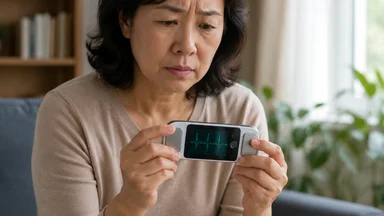
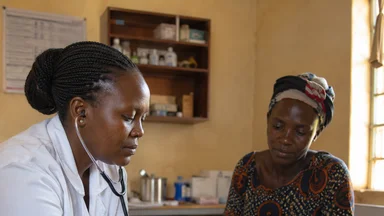
Margaret Wanjiku, a 55-year-old market vendor in Nairobi's Kibera slum, first noticed breathlessness while carrying bags of vegetables three months ago. She attributed it to age and fatigue. When her ankles began swelling and she could no longer climb the stairs to her rented room, she finally scraped together KSh 500 for a visit to the local public clinic. The GP diagnosed hypertension and prescribed a diuretic. But her symptoms worsened. It took two more paid visits and an emergency admission before an echocardiogram confirmed heart failure with reduced ejection fraction. By then, she had spent roughly KSh 10,000 out-of-pocket and lost weeks of income.
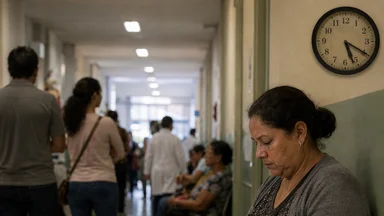
Margaret's story is not unusual. Across Kenya's urban informal settlements and rural areas, the cost of a simple GP consultation — typically KSh 500 to 1,000 at public facilities, and higher at private clinics — creates a formidable barrier to timely heart failure care. For the estimated 60% of Kenyans living on less than KSh 200 per day, each visit represents a significant financial decision. The result: delayed diagnosis, interrupted treatment, and a cycle of preventable hospitalizations that strains both families and the healthcare system.
A Single Visit Fee Can Delay Diagnosis by Months
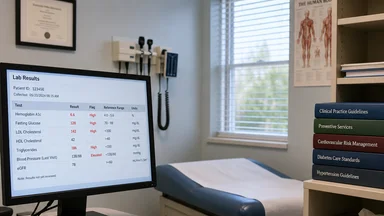
Heart failure symptoms such as breathlessness, fatigue, and ankle swelling often develop gradually. Patients in low-resource settings commonly dismiss these signs as normal aging or minor illness. But the decision to seek care is further complicated by the upfront cost of a consultation. At public dispensaries and health centres, the fee may be KSh 500, but patients also face indirect costs: transport to the facility (KSh 100–300 round trip), lost wages from half a day of waiting, and sometimes unofficial payments for registration or priority access.
For a household earning irregular income from casual labour or small-scale trade, these combined costs can equal several days' food budget. Many patients postpone visits until symptoms become severe — typically when they develop orthopnoea, paroxysmal nocturnal dyspnoea, or significant peripheral oedema. A 2024 survey published in the East African Medical Journal found that among patients presenting with heart failure at a Nairobi referral hospital, the median delay from symptom onset to first healthcare contact was 14 weeks. A separate 2025 Lancet Global Health study of Kenyan public hospitals reported a similar median time from symptom onset to confirmed diagnosis of over 12 weeks, underscoring that the diagnostic pathway itself adds further weeks after the first contact.
This pattern is especially pronounced in slums like Kibera, Mathare, and Mukuru, where informal settlements house up to 2.5 million people. Access to primary care is often limited to small private clinics charging KSh 300–500 per visit, or overcrowded public facilities with long queues. A study conducted in Kibera in 2023 reported that 44% of adults with hypertensive heart disease had not seen a clinician in the preceding year, citing cost as the primary reason.
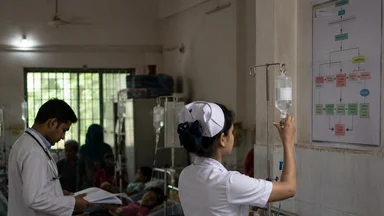
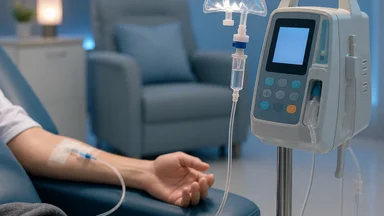
The delay has clinical consequences. Heart failure that could have been managed with lifestyle advice and first-line medications progresses to a stage requiring hospitalisation and intravenous diuretics. Left ventricular function deteriorates, and the window for optimising treatment narrows. Dr. Samuel Ochieng, a GP at the Mbagathi District Hospital in Nairobi, notes: “We often see patients when they can no longer lie flat. By that point, we're playing catch-up.”
Repeated Visits Needed for Heart Failure Confirmation
Confirming a heart failure diagnosis typically requires more than a single GP encounter. The initial assessment — history, physical exam, and possibly a chest X-ray or ECG — may raise suspicion, but echocardiography is the gold standard for confirming reduced ejection fraction and distinguishing heart failure with preserved ejection fraction. In Kenya's public sector, echocardiography is not available at most primary care facilities. Patients must be referred to a district or provincial hospital, often requiring another consultation fee and a separate booking for the ultrasound.
Transport costs multiply. A patient living in a rural area like Kisumu County may need to travel 50–100 kilometres to the nearest hospital with a functioning echo machine. Round-trip public transport can cost KSh 400–800, plus meals and possibly overnight accommodation if the scan cannot be completed in a day. Lost wages from missed work add to the burden. For a casual labourer earning KSh 300 per day, a single diagnostic trip can consume a week's income.
Even after referral, waiting times for echocardiography in public hospitals are long. Kenya has fewer than 50 public echocardiography machines nationwide, according to a 2022 Ministry of Health equipment audit. Many machines are older models prone to breakdowns, and trained sonographers are scarce. Patients routinely wait three to six months for a cardiac ultrasound slot. Private laboratories offer same-day scans, but at a cost of KSh 5,000–10,000 — prohibitive for most low-income patients.
The cumulative effect is that the median time from symptom onset to a confirmed heart failure diagnosis exceeds 12 weeks in many settings. During this period, patients may receive suboptimal treatment based on clinical suspicion alone, or may abandon the diagnostic pathway altogether.
Out-of-Pocket Costs Force Treatment Interruptions
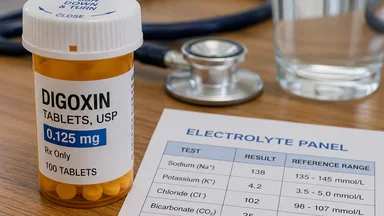
Once diagnosed, heart failure patients in Kenya face ongoing out-of-pocket costs for medications. Standard therapy includes a diuretic (e.g., furosemide), an ACE inhibitor (e.g., enalapril), and a beta-blocker (e.g., bisoprolol), plus possibly spironolactone. Monthly costs for these drugs at private pharmacies range from KSh 1,500 to 3,000. The National Hospital Insurance Fund (NHIF) covers inpatient care but does not reimburse outpatient prescriptions at most public facilities, meaning patients pay the full price at private pharmacies or hospital dispensaries.
To stretch their budgets, patients frequently skip doses or stop medications entirely. A 2024 cross-sectional study in Nairobi found that 38% of heart failure patients reported non-adherence to prescribed medications in the previous month, with cost cited as the primary reason. Diuretics are often the first to go, because patients notice they reduce symptoms like breathlessness but also cause frequent urination, which can be inconvenient for market vendors or manual labourers who lack easy toilet access.
The consequences are predictable. Without consistent ACE inhibition and beta-blockade, ventricular remodelling progresses. Fluid overload recurs, leading to acute decompensation and emergency department visits. Each admission for acute heart failure costs the health system KSh 15,000–30,000 and the patient additional out-of-pocket expenses. A 2023 study at Kenyatta National Hospital reported that 22% of heart failure readmissions within 90 days were attributable to medication non-adherence driven by cost.
Patients and families often resort to informal coping strategies: borrowing from relatives, selling assets, or seeking cheaper alternatives at unregulated pharmacies where counterfeit or expired drugs are common. These stopgap measures may temporarily lower immediate costs but ultimately increase long-term morbidity and healthcare expenditure.
Public Hospitals Face Diagnostic Equipment Shortages
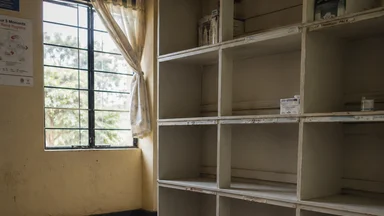
The diagnostic bottleneck is not solely financial; it is also infrastructural. Kenya's public health system is under-resourced for cardiovascular diagnostics. The 2022 Ministry of Health audit counted only 47 functional echocardiography machines in public hospitals serving a population of over 50 million. By comparison, a single large teaching hospital in the UK may have 10–15 machines. Many of Kenya's machines are concentrated in Nairobi and Mombasa, leaving rural counties with little to no access.
Equipment breakdowns are common due to irregular maintenance, lack of spare parts, and inconsistent electricity supply. In a 2024 survey of 20 public hospitals in the Lake Region, 12 reported that their echo machine had been non-functional for at least three months in the past year. Sonographer shortages compound the problem: the country has approximately 200 registered cardiac sonographers, most working in private facilities or abroad.
Point-of-care ultrasound (POCUS) — a cheaper, portable alternative — remains scarce in primary care settings despite evidence that it can be effectively used by non-specialist clinicians. A 2023 pilot programme in Kisumu trained nurses to perform focused cardiac ultrasound for heart failure screening, achieving 85% sensitivity compared to full echocardiography. However, scaling such programmes requires investment in training, equipment, and quality assurance, which has not yet materialised.
The shortage forces clinicians to rely on clinical judgment alone, which can miss up to 30% of cases, particularly heart failure with preserved ejection fraction. Patients with normal systolic function on a later echo may have been treated for months with incorrect medications. As a result, diagnostic uncertainty persists, and patients cycle through multiple visits without a clear plan.
Community Health Workers Bridge — but Cannot Replace — Clinical Care
In response to these gaps, Kenya has invested in community health worker (CHW) programmes. These trained volunteers screen for hypertension, refer suspected heart failure cases, provide adherence counselling, and conduct home blood pressure checks. A 2025 study in Lancet Global Health showed that CHW-led programmes reduced heart failure hospitalisations by 30% in participating communities, primarily through improved hypertension control and early referral.
CHWs are particularly effective at reaching patients who avoid clinics due to cost or distance. They can identify individuals with persistent breathlessness or oedema during home visits and encourage them to seek care. They also help patients navigate the health system — for example, by accompanying them to appointments or explaining how to access NHIF benefits.
However, CHWs cannot prescribe or adjust medications. They work within a hierarchical system where only clinical officers or doctors can initiate heart failure therapy. This creates a bottleneck: even if a CHW identifies a likely case, the patient still must pay for a GP consultation to get a prescription. In many areas, CHWs lack reliable phone credit or transport to follow up with patients who miss appointments.
Coordination between CHWs and formal clinics is often weak. Referral forms may go unfilled, and feedback from the clinic to the CHW is rare. A 2024 evaluation of a CHW programme in Homa Bay found that only 40% of patients referred for suspected heart failure actually attended a clinic visit within two weeks. The remainder cited cost, distance, or lack of perceived urgency. CHWs bridge some gaps but cannot eliminate the fundamental financial barrier.
Policy Fixes Could Reduce Financial Barriers
Several policy interventions could lower the financial barriers to heart failure care in Kenya. Expanding NHIF coverage to include outpatient consultations and essential medications would reduce point-of-care costs. Currently, NHIF primarily covers inpatient care, but a proposed benefit package revision in 2025 would add outpatient visits and a list of chronic disease drugs, including those for heart failure. However, implementation is slow, and many informal-sector workers are not enrolled.
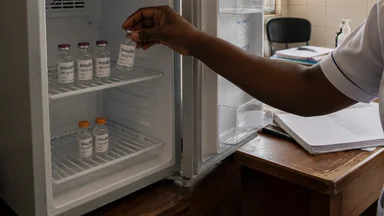
Subsidising generic heart failure medications at public pharmacies could also improve adherence. The Kenya Medical Supplies Authority (KEMSA) already procures generics at lower prices, but distribution to primary care facilities is uneven. A 2024 pilot in three counties provided free furosemide and enalapril at public clinics, resulting in a 25% reduction in heart failure admissions over six months. Scaling this would require budget allocation and supply chain strengthening.
Task-sharing echocardiography with trained nurses or clinical officers at primary care level could shorten diagnostic delays. The Kisumu POCUS programme demonstrated feasibility, but scaling requires training hundreds of providers and ensuring equipment maintenance. The Ministry of Health has drafted guidelines for POCUS use in primary care, but as of 2026, they have not been formally adopted.
Kenya's Primary Health Care Act (2023) aims to cap consultation fees at public facilities and expand community-based services. However, implementation lags due to funding constraints and competing priorities. A 2025 parliamentary review found that only 30% of counties had established the required primary care networks. Without political will and sustained investment, the gap between policy and practice will persist.
What a Reformed System Could Mean for Patients
Consider again Margaret Wanjiku, the market vendor from Kibera. Under the current system, she visited a GP three times over six months, missed two appointments because she could not afford transport, and finally received her heart failure diagnosis only after an emergency admission for pulmonary oedema. Her total out-of-pocket costs — consultations, transport, medications, and hospital copays — were approximately KSh 10,000. She lost at least two weeks of work, reducing her household income by KSh 3,000.
In a reformed system with outpatient NHIF coverage, fee caps at public clinics, and decentralised echocardiography, her trajectory could be different. At the first sign of breathlessness, she could visit a local health centre for a consultation costing KSh 100. A nurse trained in POCUS would perform a focused cardiac ultrasound the same day. If abnormal, she would be started on guideline-directed medical therapy at no cost for the first month. Within two weeks, she would have a confirmed diagnosis and a treatment plan. Total out-of-pocket: KSh 1,500. Annual savings from averted admissions: KSh 20,000–30,000 per patient.
Countries like Rwanda and Ethiopia have shown that targeted subsidies and task-sharing can improve cardiovascular outcomes at low cost. Kenya's own HIV and tuberculosis programmes demonstrate that chronic disease care can be delivered effectively when financial barriers are removed. However, translating these lessons to heart failure care requires deliberate policy action. As of 2026, the Ministry of Health has not yet allocated specific funding for heart failure diagnosis or treatment in primary care. Without such commitment, the current trajectory suggests that for every Margaret who eventually receives a diagnosis, dozens more will remain undiagnosed until a preventable crisis lands them in the emergency room. The question is not whether reform is possible, but whether the political will to act will arrive before the next wave of preventable hospitalisations.
This article is for informational purposes only and does not constitute personalised medical advice. Individuals with symptoms of heart failure should seek evaluation by a qualified healthcare professional.