Antibiotic Resistance Halves Gonorrhea Cure Rates in Kenyan Public Clinics
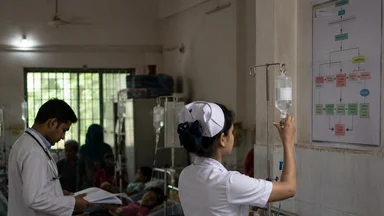
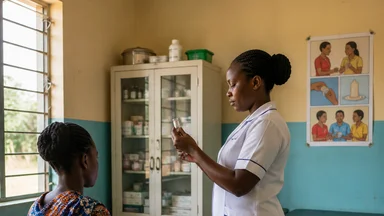
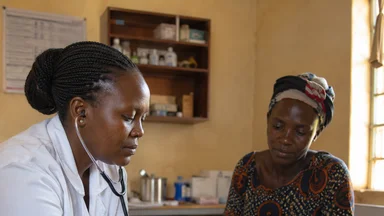
In a Nairobi public clinic, a 24-year-old woman returns three weeks after receiving the standard 250 mg ceftriaxone injection for gonorrhea. Her symptoms persist. The clinician, bound by national protocol, repeats the same dose. This scenario, once rare, is now common across Kenya's public health facilities. Data from the Kenya Medical Research Institute (KEMRI) reveals a stark trend: the cure rate for gonorrhea using first-line ceftriaxone has dropped from over 97% in 2018 to below 50% in 2023 at sentinel sites in Nairobi. The crisis, driven by antibiotic resistance, is forcing clinicians to improvise and exposing deep fractures in the global response to sexually transmitted infections.
Cure rates drop from 97% to below 50% in Nairobi sentinel sites
KEMRI surveillance data collected between 2018 and 2023 at five public clinics in Nairobi shows a steady decline in the effectiveness of ceftriaxone, the last remaining reliable antibiotic for gonorrhea. In 2018, only 3% of patients had persistent infections after treatment. By 2023, that figure had climbed above 50% in some months. Laboratory testing of isolates reveals ceftriaxone resistance in 15–20% of samples, with reduced susceptibility in many more. Clinicians report patients returning with discharge and pelvic pain after completing the standard single-dose regimen.
The numbers align with anecdotal reports from other urban centers. In Mombasa, a clinician described a young man who had received ceftriaxone three times in six months, each time with only temporary relief. Without culture and sensitivity testing—rarely available in public clinics—the clinician cannot distinguish between resistance, reinfection, or a non-gonococcal cause. The standard 250 mg dose of ceftriaxone, once reliably curative, now fails for a growing proportion of patients. Some clinicians have begun doubling the dose to 500 mg, but no official guidance supports this practice.
The implications extend beyond individual suffering. Untreated gonorrhea can lead to pelvic inflammatory disease, infertility, and ectopic pregnancy. In pregnant women, it increases the risk of preterm birth and neonatal conjunctivitis. The psychological toll is also significant: patients who fail treatment often face stigma from partners and providers, and may delay seeking care again. The loss of a once-reliable cure undermines trust in public health services.
The KEMRI data, presented at a regional STI conference in 2024, prompted a muted response from the Ministry of Health. No formal change to the national treatment guidelines has been issued. The World Health Organization (WHO) has classified ceftriaxone-resistant gonorrhea as a high-priority threat, but global action plans have yet to translate into local practice changes.
Why Kenyan public clinics face the worst of the crisis
Kenya's public clinics operate under constraints that amplify the impact of resistance. Empiric treatment—treating based on symptoms alone—is the standard in roughly 80% of facilities because culture and sensitivity testing is unavailable. Clinicians rely on the syndromic approach recommended by the WHO: a patient with urethral discharge or vaginal discharge and risk factors receives ceftriaxone plus azithromycin for chlamydia coverage. But resistance testing requires a laboratory with trained staff, reagents, and a reliable supply chain—all of which are scarce in the public sector.
The national protocol still specifies a single 250 mg intramuscular dose of ceftriaxone, unchanged since 2015. Meanwhile, private pharmacies in many neighborhoods sell oral antibiotics—ciprofloxacin, doxycycline, even substandard ceftriaxone—without prescription. Patients often self-treat with incomplete courses, driving further resistance. A 2022 study in Kisumu found that nearly 40% of patients with STI symptoms had taken antibiotics before visiting a clinic, many of them ineffective for gonorrhea.
Delayed care-seeking compound the problem. Stigma around STIs, especially among young women, leads many to wait weeks before coming to a clinic. By then, the infection may have ascended the reproductive tract, making treatment more difficult even with a susceptible antibiotic. Cost is another barrier: a clinic visit may be free, but transport, lost wages, and the cost of partner treatment deter many from returning for follow-up. When the first dose fails, patients may not come back at all.
The result is a vicious cycle: empiric treatment breeds resistance, resistance leads to treatment failure, and treatment failure—without diagnostic feedback—is mistaken for reinfection or non-compliance. The system lacks the feedback loops needed to detect and respond to resistance in real time. A 2023 audit of 20 public clinics in Nairobi found that only three had submitted any gonorrhea isolates for susceptibility testing in the previous year.
The WHO global action plan meets local budget reality
The WHO's Global Action Plan on Antimicrobial Resistance, updated in 2022, calls for strengthened surveillance, stewardship, and access to quality-assured antibiotics. For gonorrhea specifically, the WHO recommends that countries monitor ceftriaxone susceptibility and switch to alternative regimens when resistance exceeds 5%. Kenya's national STI guidelines were updated in 2022 to reflect this recommendation, but implementation has stalled. The new guidelines recommend culture and sensitivity testing for all treatment failures, but the tests cost roughly US$ 10–15 per sample—exceeding the monthly drug budget for many clinics.
Newer antibiotics, such as zoliflodacin and gepotidacin, are in phase 3 clinical trials and show promise against resistant strains. Zoliflodacin, developed by the Global Antibiotic Research and Development Partnership (GARDP), completed a pivotal trial in 2023 with cure rates above 90% for uncomplicated gonorrhea. But even if approved, it will take years to reach public clinics in Kenya. The global fund procurement cycles, which supply antibiotics to low-income countries, are slow to incorporate new drugs. Meanwhile, resistance to ceftriaxone continues to spread.
Kenya's national budget for STI control is less than US$ 2 million per year, a fraction of what is needed. The cost of resistance testing for all suspected gonorrhea cases would exceed the entire STI program budget. Even simpler molecular tests, such as point-of-care PCR, cost US$ 15–20 per test and require stable electricity and cold chains. The Ministry of Health has prioritized HIV and tuberculosis, which account for higher mortality. Gonorrhea, though less deadly, causes significant morbidity and fuels HIV transmission.
The disconnect between global targets and local capacity is stark. The WHO's 2022 guidelines assume a level of laboratory infrastructure that does not exist in most of sub-Saharan Africa. Without investment in diagnostics, surveillance, and a reliable supply of new antibiotics, the global action plan remains aspirational. Kenya's experience is a warning for other countries with similar resource constraints.
Expert disagreement on the path forward
The appropriate response to falling cure rates is contested among experts. Some argue for an immediate switch to dual therapy—a higher dose of ceftriaxone plus a second antibiotic, such as gentamicin or spectinomycin. Dual therapy has been adopted in several countries, including the United Kingdom and Australia, but evidence from African settings is limited. A 2023 study in South Africa found that dual therapy with ceftriaxone 500 mg plus azithromycin 2 g achieved cure rates above 95%, but the study was small and did not include long-term resistance monitoring.
Others warn that increasing the dose or adding a second drug will accelerate resistance to both agents. The history of gonorrhea is a history of antibiotics lost one by one: sulfonamides, penicillins, tetracyclines, fluoroquinolones, and now cephalosporins. Overuse of any new agent will shorten its useful life. The WHO recommends reserving new antibiotics for confirmed resistant cases, but that requires diagnostics that are not available. The tension between individual patient cure and population-level resistance is acute.
Some experts call for enhanced surveillance as the first step. “Without knowing the true prevalence of resistance, we are flying blind,” said Dr. Samuel Muiruri, a microbiologist at KEMRI, in an interview. He advocates for sentinel surveillance sites with routine culture and susceptibility testing, even if limited to a few clinics. Others counter that surveillance without a treatment alternative is useless—patients will continue to receive ineffective drugs while the data accumulates.
Clinicians on the ground face a daily dilemma. They must decide whether to follow a protocol they know is failing or to improvise with unproven regimens. Some have started using ceftriaxone 500 mg off-label, citing anecdotal success. Others add a week of doxycycline or azithromycin, even though macrolide resistance is also rising. The lack of official guidance leaves them vulnerable to accusations of malpractice if outcomes are poor. The Ministry of Health has not issued an update since 2022, and the national STI technical working group meets infrequently.
What works in other African settings and what doesn't
South Africa offers a contrast. Its enhanced surveillance network, established in 2017, tracks gonorrhea resistance at 15 sentinel sites. When ceftriaxone resistance exceeded 5% in 2020, the national guidelines were updated to dual therapy. Treatment failure rates have remained below 10% since then, though the cost of the program is high—roughly US$ 500,000 per year for surveillance alone. Kenya, with a larger population and smaller budget, cannot replicate this model without external support.
Uganda has focused on syndromic management plus partner notification. A 2021 study found that treating all sexual partners of index patients reduced reinfection rates by 40%, even when the initial treatment was suboptimal. Partner notification is low-cost and does not require diagnostics, but it depends on patient willingness to disclose partners—a challenge in stigmatized conditions. Uganda has also piloted the use of rapid point-of-care tests for gonorrhea and chlamydia, but the tests are not yet widely available.
Ethiopia tested a point-of-care molecular diagnostic for gonorrhea in a pilot program in Addis Ababa. The test, which uses a portable PCR device, provided results in 90 minutes and allowed targeted treatment. The pilot reduced the use of unnecessary antibiotics and improved cure rates, but the cost—US$ 20 per test—was prohibitive for scale-up. The device also required stable electricity and a cold chain for reagents, limiting its use to central clinics.
Kenya has experimented with a pharmacy-led rapid test pilot in Kisumu, where community pharmacists offered free rapid tests for gonorrhea and chlamydia. Patients with positive results received a referral to a public clinic for treatment. The pilot increased testing rates but did not improve treatment outcomes, because the clinics still used ceftriaxone monotherapy. The pilot highlighted the need for effective treatment at the point of care, not just diagnosis.
Practical steps for clinicians in under-resourced settings
For clinicians working in settings where resistance testing is unavailable, the first step is to raise suspicion when standard treatment fails. A patient who returns with persistent symptoms after ceftriaxone should be considered a possible resistance case, not simply non-compliant. Clinicians should request culture and sensitivity testing if any laboratory in the area offers it, even if it means sending the sample to a distant facility. The results, even if delayed, can guide individual treatment and contribute to surveillance.
Reporting treatment failures to the district surveillance officer is essential, even if the report is informal. The Ministry of Health relies on passive reporting, but few clinicians take the time to file a case report. A simple phone call or WhatsApp message to the district STI coordinator can alert the system to emerging resistance. Some counties have established treatment failure registries; clinicians should use them.
Counseling patients on completing follow-up testing is critical. Many patients do not return for a test of cure because they feel better, but asymptomatic infections are common. A test of cure, ideally 7–14 days after treatment, can detect failure before symptoms return. Clinicians should emphasize the importance of follow-up, especially for women, who are at risk of pelvic inflammatory disease and infertility. Partner treatment and condom use should be reinforced at every visit.
Finally, clinicians should advocate for better diagnostics and updated guidelines at the facility and county level. The voice of frontline providers is powerful in pushing for change. Joining professional networks, such as the Kenya Medical Association or the STI Technical Working Group, can amplify that voice. The crisis in gonorrhea treatment is not inevitable—it is a failure of systems, not of science. But until those systems improve, clinicians must navigate uncertainty with the tools they have.
The economic burden of treatment failure
Beyond clinical consequences, falling cure rates impose a significant economic burden on patients and the health system. A patient who requires a second or third round of treatment incurs additional costs for transport, clinic visits, and medications. For a daily wage earner in Nairobi, a single missed day of work can mean lost income for the week. A 2023 survey in informal settlements found that the average cost of a single STI episode—including treatment, transport, and lost wages—was roughly US$ 15–25, a substantial sum when the monthly income is often below US$ 100. When treatment fails, these costs double or triple, pushing households further into poverty.
At the system level, repeated visits for treatment failure consume scarce clinic resources. A clinician who spends 20 minutes on a follow-up visit for a failed gonorrhea case is not seeing other patients with acute infections or chronic conditions. The opportunity cost is real, especially in facilities where a single clinician sees 80–100 patients per day. The Ministry of Health has not calculated the total cost of treatment failure, but rough estimates from KEMRI suggest that the direct cost of managing a single case of ceftriaxone-resistant gonorrhea—including diagnostics, second-line antibiotics, and follow-up—is roughly US$ 50–80, compared to less than US$ 5 for a first-line cure. Scaling that difference across an estimated 100,000 gonorrhea cases per year in Kenya yields a potential annual cost of tens of millions of dollars.
Some economists argue that investing in resistance surveillance and new antibiotics would be cost-effective in the long run, even for a lower-mortality infection like gonorrhea. A 2022 modeling study from the Center for Global Development estimated that spending US$ 1 million per year on gonorrhea surveillance in Kenya could save US$ 5–10 million annually in treatment costs and lost productivity. But such calculations carry uncertainty, and budget allocations are driven by immediate needs rather than long-term projections. The Ministry of Health's current focus on HIV and tuberculosis leaves little room for gonorrhea, despite its role in facilitating HIV transmission.
The economic argument also highlights equity dimensions. Wealthier patients can bypass public clinics and seek care at private facilities where culture testing and higher-dose ceftriaxone are available for a fee. The poor, who rely on public clinics, bear the brunt of resistance. A 2023 study in Nairobi found that patients in the lowest income quartile were three times more likely to experience treatment failure than those in the highest quartile, largely because they had no access to second-line options. This disparity erodes trust in the public health system and may drive patients toward informal providers, where unregulated antibiotics further fuel resistance.
Counter-argument: Is the cure rate decline as bad as it seems?
Not all experts accept the KEMRI data at face value. Some question whether the decline in cure rates is purely due to resistance, or whether confounding factors are at play. For example, the sentinel sites in Nairobi may not represent the country as a whole. Resistance could be concentrated in urban areas with high antibiotic use, while rural areas may still see cure rates above 90%. A 2023 study from rural western Kenya found ceftriaxone susceptibility in 92% of isolates, though the sample size was small. Without nation-wide surveillance, the true prevalence of resistance remains uncertain.
Reinfection is another confounder. The KEMRI data relies on syndromic follow-up, not molecular confirmation of persistent infection. A patient who tests positive after treatment may have been reinfected by an untreated partner, rather than having a resistant strain. Studies in other African settings have found that 30–50% of apparent treatment failures are actually reinfections. If the same holds in Kenya, the true rate of resistance may be lower than 50%. However, even a 25% resistance rate would be alarming and would still require a change in treatment protocols.
Some clinicians argue that the syndromic approach itself biases the data. Patients with persistent discharge may have non-gonococcal urethritis or cervicitis caused by chlamydia, mycoplasma, or trichomonas—infections that ceftriaxone does not treat. Without etiological testing, these cases are misclassified as gonorrhea treatment failures. A 2022 study in Nairobi found that among patients with persistent symptoms after ceftriaxone, only 40% had gonorrhea on culture; the rest had other pathogens. This suggests that the cure rate for true gonorrhea may be higher than the overall syndromic failure rate.
Despite these caveats, the trend is concerning. Even if the true cure rate is 70% rather than 50%, it represents a significant drop from 97% in five years. The WHO threshold for switching therapy is 5% resistance, which Kenya has clearly exceeded. The debate over the exact number should not delay action. As one KEMRI researcher put it, "We don't need perfect data to know that the current protocol is failing. We need a response."
This article is for informational purposes only and does not provide personalized medical advice. Readers should consult a qualified healthcare professional for diagnosis and treatment of STIs.