Cervical Cancer Screening Tools Sit Unused in Rural Indian Primary Clinics
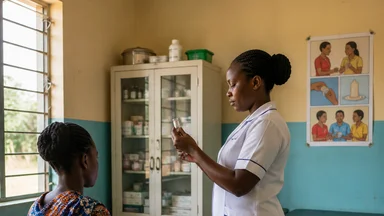
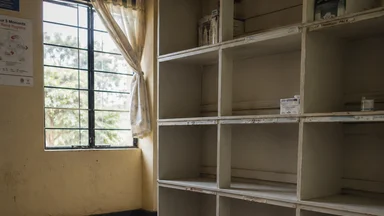
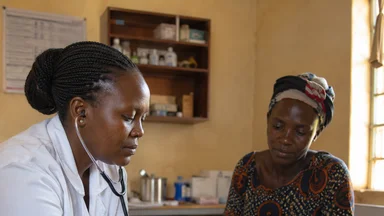
At the Ghatampur Primary Health Centre in Uttar Pradesh, a box of visual inspection with acetic acid (VIA) kits has sat unopened on a shelf for eight months. The vinegar-based test costs less than a dollar per patient and can detect precancerous lesions in minutes. Yet the nurse-midwife, trained two years ago to perform the test, has not used a single kit in the past six months. The reason: no speculums, no chaperone, and a patient load of 120 women per day.
This scene repeats across thousands of sub-centres and primary health centres (PHCs) in India. The tools exist. The evidence is strong. But the gap between what clinicians know works and what they actually do remains wide. Cervical cancer kills roughly 77,000 Indian women each year—more than any other cancer in the country—yet a large proportion of these deaths are preventable through timely screening and treatment.
The cheap test that stays on the shelf, the urban-rural divide in access, and the supply-chain fixes that cost little but could save thousands of lives all point to a systemic failure. Visual inspection with acetic acid (VIA) is a low-tech, low-cost screening method endorsed by the World Health Organization. A health worker applies dilute vinegar to the cervix, waits one minute, and looks for white patches that indicate abnormal cells. The test requires no laboratory, no electricity, and no expensive reagents—just a speculum, a headlamp, and a bottle of vinegar. The cost per test is around $0.50 to $1.00.
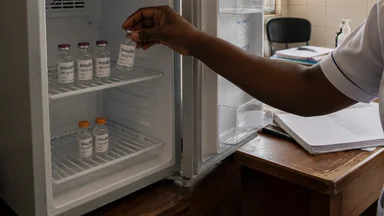
HPV DNA testing, another WHO-recommended approach, is more sensitive but costlier. It detects high-risk strains of the human papillomavirus that cause nearly all cervical cancers. Self-collected vaginal samples make it feasible even in settings where pelvic exams are culturally sensitive. But the test requires cold-chain storage for reagents and a laboratory with PCR capacity—both scarce in rural India.
A study published in the Indian Journal of Public Health in 2023 by Sharma et al. found that 80% of PHCs in Rajasthan had experienced stockouts of VIA reagents in the previous three months. HPV test kits, often donated or supplied through pilot programs, sat in storage rooms past their expiry dates. The problem was not awareness: most nurses and doctors knew the guidelines. The gap was operational: no one had ordered the supplies, the cold chain had failed, or the single-use speculums had not been reimbursed.
The WHO recommends a screen-and-treat approach: if a woman tests positive, she receives cryotherapy or thermal ablation during the same visit. This eliminates the need for a follow-up appointment, which many women cannot attend due to travel costs or family obligations. But same-visit treatment requires functioning cryotherapy equipment, trained staff, and a steady supply of medical-grade carbon dioxide or nitrous oxide—all of which are often missing.
India launched a national screening program for cervical, breast, and oral cancers in 2016, targeting women aged 30 to 65. The program recommends VIA at PHCs and HPV testing at district hospitals. But coverage remains low: the National Family Health Survey (2019-2021) found that only 1.9% of women aged 30-49 had ever been screened for cervical cancer. The gap between policy and practice is vast.
Why a $1 Test Remains Out of Reach
The barriers are multiple and interlocking. First, procurement: VIA reagent (5% acetic acid) is not on the essential medicines list in many states, so PHCs cannot order it through regular supply chains. Instead, they rely on ad hoc donations or purchase it from local pharmacies, which may not stock it. HPV test kits require cold-chain transport from manufacturers in Bengaluru or Delhi to remote PHCs—a logistical challenge that often fails.
Second, reimbursement: single-use speculums and other consumables are not always covered by state health budgets. In some PHCs, nurses are expected to reuse metal speculums after autoclaving, but the autoclave may be broken or the electricity supply unreliable. A 2022 audit in Uttar Pradesh found that 40% of PHCs had non-functional autoclaves.
Third, private sector costs: In urban areas, HPV testing is available through private laboratories at ₹500 to ₹1,500 per test—prohibitively expensive for most rural women. The public sector offers free screening, but the tests are often unavailable. A woman who travels 30 kilometres to a PHC for screening may be told to come back next month because the kits have run out.
Fourth, training: Nurse-midwives receive a one-time training on VIA, often lasting two days. But without regular refreshers or supervision, skills degrade. A study published in the Journal of Family Medicine and Primary Care in 2021 by Deshpande et al. found that only 60% of trained nurses in Maharashtra could correctly identify a positive VIA lesion six months after training. The lack of a national screening registry means no one tracks how many women are screened, how many test positive, or how many complete treatment.
The result is a system where the cheapest, simplest test is often the hardest to deliver at scale. As one district health officer in Madhya Pradesh put it: “We have the kits. We have the training. But we don’t have the system to make it work every day.”
The Urban Contrast: Pap Smears and Private Labs
In Mumbai, a woman covered by employer-based health insurance can walk into a private clinic and receive a liquid-based cytology (Pap smear) with results within 48 hours. If she tests positive for high-risk HPV, she can undergo colposcopy and biopsy the same week. Private insurance plans typically cover annual screening for women aged 30 to 65, and some plans include catch-up HPV vaccination for adolescent daughters.
The contrast is stark. In urban India, five-year survival for cervical cancer is roughly 60%, compared to 40% in rural areas. This 20-percentage-point gap reflects later diagnosis, incomplete treatment, and higher loss to follow-up in rural settings. Urban women are more likely to have symptoms detected early, to access diagnostic confirmation, and to complete treatment at a tertiary cancer centre.
Private schools in cities like Delhi and Bengaluru have started offering HPV vaccination to girls aged 9-14, with costs ranging from ₹2,000 to ₹4,000 per dose. The vaccine is not part of the national immunisation program, though the government has announced plans to introduce it. As of late 2024, fewer than 5% of Indian girls had received the full HPV vaccine series, according to some estimates.
But even urban screening is not universal. Among low-income women in slums, access to private labs is limited, and public hospitals often have long waiting lists for colposcopy. The gap within cities mirrors the rural-urban divide: those with resources get screened; those without do not. The difference is that in rural areas, the divide is absolute—the test may simply not exist.
A similar pattern appears in other low- and middle-income countries. In Kenya, for instance, HPV test shipments have stalled, leaving clinics without kits. The same story plays out across sub-Saharan Africa and South Asia: evidence-based tools exist, but supply chains and health systems fail to deliver them.
Evidence That Screen-and-Treat Works
The evidence for screen-and-treat is robust. A WHO meta-analysis of randomised trials found that VIA screening, followed by immediate cryotherapy for positives, reduces cervical cancer mortality by 31% in women aged 30-65. The effect is even larger when HPV testing is used, with some studies showing a 40-60% reduction in incidence.
The Tamil Nadu Cervical Cancer Screening Pilot, conducted by the State Health Department in collaboration with the World Health Organization from 2016 to 2018, demonstrated the feasibility of same-visit cryotherapy at the PHC level. Trained nurse-midwives performed VIA, and if the test was positive, they applied cryotherapy immediately using a portable cryo unit. Loss to follow-up dropped from 60% (typical for a two-visit approach) to less than 10%. The pilot treated over 5,000 women in two years, with a complication rate of less than 1%.
A similar program in Jharkhand, supported by the NGO Jeevan Jyoti Foundation, used ASHA (Accredited Social Health Activist) workers to mobilise women for screening camps. The acceptance rate was over 90%, and 85% of women who screened positive received same-day treatment. The key was that ASHAs knew the women personally, could address fears about pelvic exams, and accompanied them to the PHC.
These pilots show that screen-and-treat works even in resource-poor settings. The challenge is scaling them from pilot to program. In Tamil Nadu, the pilot was funded by external donors and had dedicated logistics support. When the funding ended, the cryo units fell into disrepair and the supply of medical gas ran out. Sustainability requires embedding the program in the public health system, not running it as a vertical project.
The contrast with NAFLD screening protocols in the US is instructive. In both cases, evidence-based screening tools exist but are underused—in the US because of time constraints and competing priorities, in India because of supply failures and training gaps. The common thread is that primary care systems are not designed to deliver preventive services reliably.
What Clinicians Actually Face
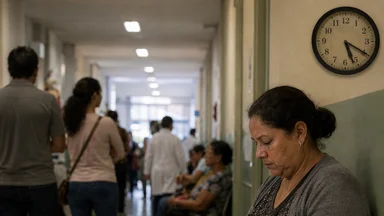
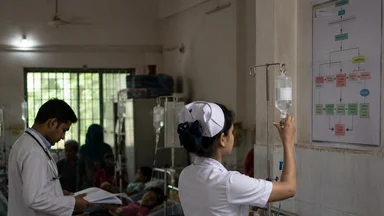
A nurse-midwife in a rural PHC in Bihar sees an average of 120 patients per day. Her responsibilities include antenatal care, immunisation, family planning, and treatment of common infections. Adding cervical cancer screening to her workload, even a five-minute VIA test, requires her to prioritise it over other duties. Without a dedicated screening day or an extra staff member, screening gets pushed aside.
When she does perform VIA, she faces practical obstacles. The cryotherapy gas cylinder may be empty—refills are supposed to come from the district hospital but often do not arrive for months. The speculum may be the only one available, so she must sterilise it between patients, adding 10 minutes per exam. There is no chaperone, and many women refuse a pelvic exam without a female attendant.
Stock records in many PHCs show a pattern: VIA reagent is ordered once a year, runs out after two months, and is not reordered for another ten months. HPV test kits, if supplied, have a shelf life of six months and require refrigeration. In PHCs without a functioning refrigerator, the kits expire before use. The district health officer may visit once per quarter, but the visit focuses on immunisation coverage and maternal mortality, not screening.
The disconnect between policy and reality is captured in a 2022 study from Karnataka: 95% of PHC doctors knew that screening for cervical cancer is recommended, but only 12% had performed a VIA test in the past month. The reasons cited were lack of supplies (78%), lack of time (65%), and lack of training (30%). The gap is not one of knowledge but of system support.
In urban clinics, the challenges are different but equally real. Private practitioners may prefer Pap smears over VIA because they are more familiar and generate higher reimbursement. But Pap smears require a laboratory, and results take days to return. Many women do not come back for results, and those who test positive may not return for colposcopy. The two-visit model, whether public or private, loses patients at every step.
Supply-Chain Fixes That Cost Little
Several low-cost solutions exist. Battery-operated cryotherapy devices, such as the CryoPen or the portable thermal ablator, eliminate the need for medical gas cylinders. These devices cost roughly $500-$1,000 each and can be recharged using solar panels. Pilot programs in Uganda and Zambia have shown them to be effective and acceptable to patients.
Pooled procurement for HPV test kits could reduce costs by 30-50%. The Global HPV LabNet, coordinated by WHO, offers a mechanism for countries to negotiate bulk prices. India’s public sector procurement agency, the Tamil Nadu Medical Services Corporation, could extend its model to cervical cancer supplies, ensuring regular ordering and distribution.
A mobile app for stock tracking, integrated with the state’s health management information system, could alert district officers when VIA reagent or speculums run low. Simple interventions—like adding VIA reagent to the essential medicines list, or reimbursing single-use speculums—could be done through a single administrative order.
ASHAs, who already receive incentives for immunisation and family planning, could be given a small payment for each woman they bring to screening and who completes treatment. In the Jharkhand pilot, an incentive of ₹50 per woman increased screening uptake by 40%. The cost is trivial compared to the cost of treating advanced cervical cancer, which can exceed ₹1 lakh per patient.
India’s national free screening program, launched in 2016, has the right framework but lacks implementation. The program specifies that screening should be offered at PHCs every five years for women aged 30-65. But without a registry to track who has been screened, the program relies on opportunistic screening—women who happen to visit the PHC for another reason. A systematic approach, such as door-to-door mobilisation by ASHAs, is needed to reach the unscreened population.
For district health officers, a practical checklist could help close the gap. Key actions include verifying VIA reagent expiry dates monthly, training staff on the single-visit protocol, linking PHCs to the nearest comprehensive emergency obstetric and newborn care (CEmONC) facility for treatment of complications, using the WHO-recommended 30-65 age band, and reporting stockouts through an integrated dashboard. These are not expensive or technically difficult steps—they require only consistent attention.
In the end, the screening gap is not a technology problem. It is a management problem. The tools exist, the evidence is clear, and the cost is low. What is missing is the will to make the system work for every woman, regardless of where she lives. As one public health expert noted: “We know what to do. We just don’t do it.”
A Practical Checklist for District Officers
For district health officers seeking to improve cervical cancer screening coverage, the following actions are evidence-based and low-cost. However, these steps are not without challenges. For example, adding VIA reagent to the essential medicines list may require bureaucratic approvals that can take months. Training staff every six months demands time and resources that may not be available. And even with a dashboard, stockouts may persist if suppliers fail to deliver. Nevertheless, these actions address the most common barriers identified in studies across India.
- Verify VIA reagent expiry dates monthly. Ensure that each PHC has at least a three-month supply of 5% acetic acid, single-use speculums, and headlamps. Add VIA reagent to the state essential medicines list if not already included.
- Train staff on the single-visit protocol. Conduct refresher training every six months for nurse-midwives on VIA technique and cryotherapy. Use competency-based checklists and observed practice sessions.
- Link PHCs to the nearest CEmONC facility. Establish a referral pathway for women with positive VIA or HPV tests who need colposcopy or biopsy. Ensure transport is available and that the referral facility has functional equipment.
- Use the WHO-recommended 30-65 age band. Focus resources on this age group, which has the highest risk of cervical cancer. Avoid screening women under 30 unless they are HIV-positive or have other risk factors.
- Report stockouts through an integrated dashboard. Use a mobile app or SMS system to track stock levels of VIA reagent, speculums, cryotherapy gas, and HPV kits. Trigger automatic alerts when supplies fall below a threshold.
These steps are not exhaustive, but they address the most common barriers identified in studies across India. Implementing them consistently could reduce the gap between evidence and practice significantly. The cost is modest; the potential benefit in lives saved is enormous.
This article is for informational purposes only and does not constitute personalised medical advice. Readers should consult their healthcare provider for any health concerns or before making any decisions related to screening or treatment.